Tag: technology

  • A Monkey in the Middle?

    A Monkey in the Middle?

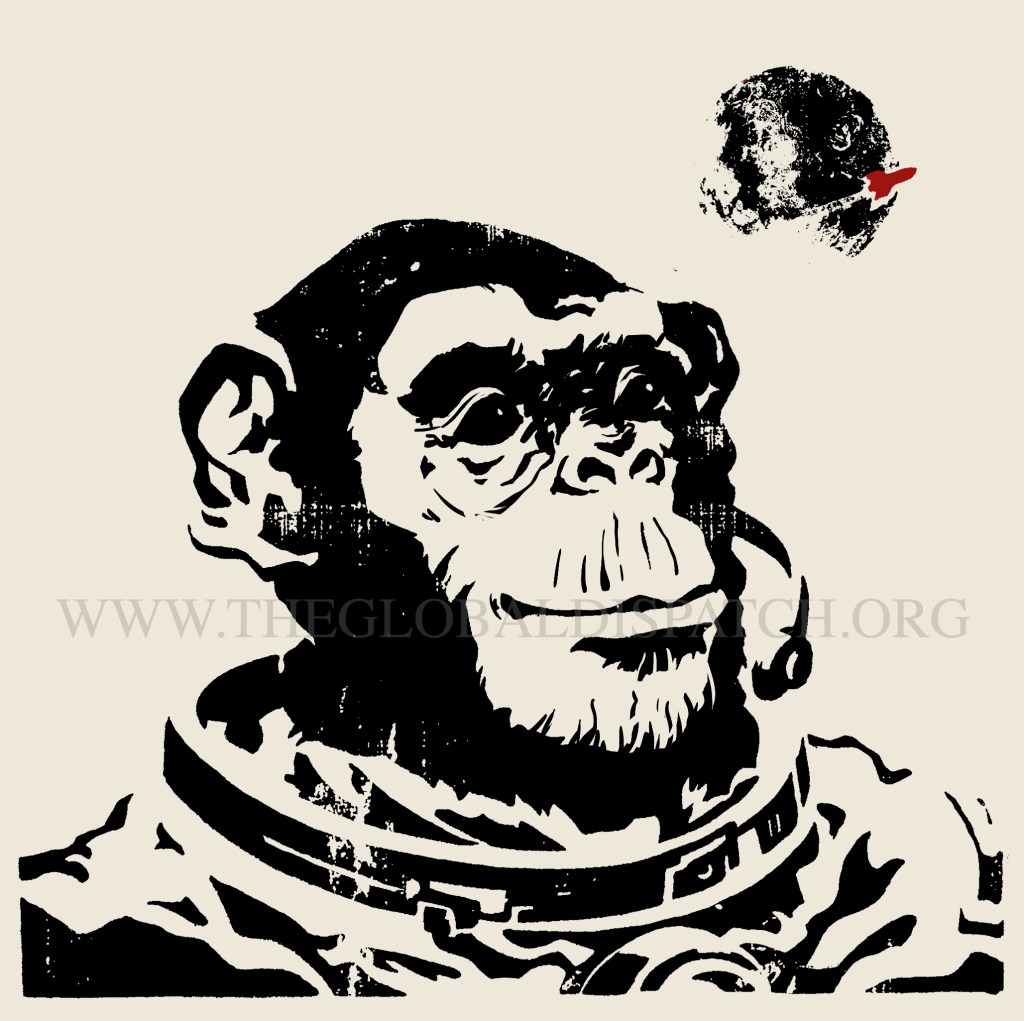
    With the recent news of animals astronauts, one of the most tantalizing rumors emerging from the program’s shadow is the identity of a liaison between the creatures and human scientists: an elderly space ape. This figure is said to have been one of the program’s first test pilots and is believed to have played a crucial role in bridging the gap between the furry explorers and the humans in charge. Some suggest that this ape may be one of the few remaining links to the early days of the program, possibly even an integral figure in developing the genetic or technical modifications that made them capable of space travel.

    Could this mysterious figure be related to America’s orginal Ham the Astrochimp? The first great ape reaching suborbital flight during the Mercury program certainly captured the hearts of many in 1961. Officially, after his retirement from NASA, Ham eventually joined a group of chimpanzees at the North Carolina Zoo where he passed away in 1983. With the many uncanny stories recently emerging, conjecture may be rampant concerning this ape’s true origins. A clone? Secret offspring?

    The two indiers have only confirmed the chimps’s existence but would not disclose any further details. When pressed when we’ll hear more about him “He’ll decide when the time is right,” was all that was said, in a tone conveying a sense of reverence for the figure. From what could be gatherered, the ape also acts as a flight director in the program.

    Is humanity on the verge of a new space age—one led by former test subjects? Or is this just another wild conspiracy? One thing is certain: if a chimp is running the show, we might all be bananas for not paying closer attention.

  • The Case for Space

    The Case for Space

    In a world facing numerous challenges, some may question whether space exploration is a worthwhile pursuit or a diversion of resources from more urgent Earthly concerns. While space exploration symbolizes human ambition, the idea that we must choose between it and solving terrestrial issues is rather a false dichotomy.

    Within the last several decades we have witnessed a growing disparity in wealth, both within the U.S. and globally. The real question lies in resource allocation and ensuring that innovations benefit those in need in a rapidly changing world. Space exploration, driven by the challenge of solving complex problems, often yields advancements that reach the public in ways a profit-driven model would not. Unlike trade secrets, scientific discovery is meant to be shared, fostering progress on a wider scale.

    The advancements driven by space research have transformed life on Earth in ways often forgotten simply because they have become so mainstream. From the miniaturization of everyday devices to medical imaging, space science has led to innovations people rely on. Satellites developed for space missions now provide GPS and essential services including weather forecasting, global communication, and disaster response. Additionally, NASA’s research has contributed to medical breakthroughs such as MRI technology, artificial limbs, radiation shielding, and treatments for cardiovascular health. Similarly, water purification systems, satellite imaging used in agriculture, and solar panel advancements can be used to inform and combat the challenges of climate change.

    Beyond technological progress, space exploration fosters a sense of collaboration. Countries that may otherwise be political rivals share knowledge, technology, and resources, promoting peaceful cooperation. Space science also inspires social progress by fueling curiosity and education. Programs encouraging young people to pursue STEM careers plant the seeds for curious minds to grow into ambitious and productive citizens. As investment in space grows, so does its impact on everyday life. Much like the “overview effect” experienced by some astronauts, we here on Terra Firma should aspire to take in the wider and more interconnected perspective of humanity and its place in the universe.

  • Print Media: An Enduring Source

    Print Media: An Enduring Source

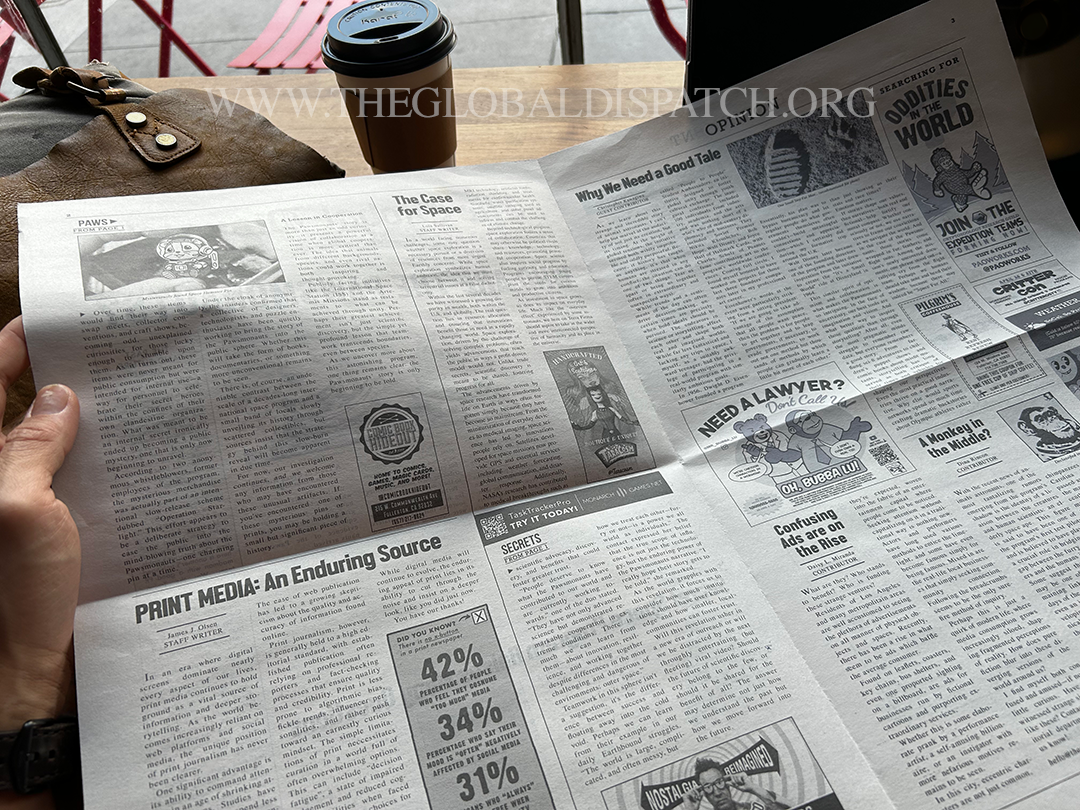
    In an era where digital screens dominate nearly every aspect of our lives, print media continues to hold ground as a vital source of information and deeper storytelling. As the world becomes increasingly reliant on web platforms and social media, the unique position of print journalism has never been clearer.

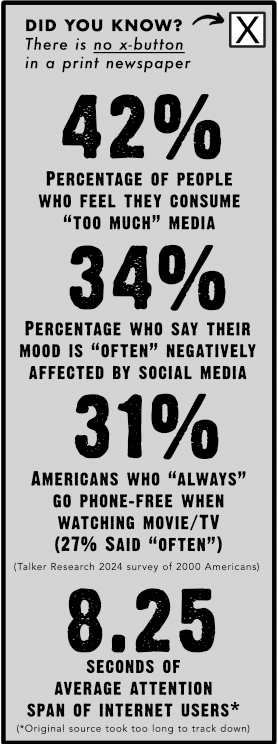
    One significant advantage is its ability to command attention in an age of shrinking attention spans. Studies have shown that people spend less time on each piece of content, (and there could be no more appropriately superfluous word) scrolling through endless social media feeds or skimming online articles. In contrast, print demands a level of engagement, perhaps because of its increasing rarity. Readers are more likely to focus on a physical newspaper or magazine without the distractions of push notifications or hyperlinks. Moreover, print media offers a level of trustworthiness that’s often lacking in the digital world.

    Online content can often be tainted by misinformation, clickbait headlines, and unverified sources without clear indication as to their promotional, satirical, or humorous nature. The ease of web publication has led to a growing skepticism about the quality and accuracy of information found online. Print journalism, however, is generally held to a high editorial standard, with established publication often relying on professional reporters and fact-checking processes that ensure quality and credibility. Print is less prone to algorithmic bias, fickle trends, influencer personalities, and rather push toward an earnestly curious mindset.

    The simple limitations of print necessitates curation in a world full of often overwhelming options. This can include “decision fatigue”, a state of impaired judgment and reduced cognitive abilities when faced with near infinite choices for consumption. In addition, the tactile nature of print provides an experience that digital media cannot replicate. Reading a physical medium offers a sense of permanence and intentionality—an opportunity to unplug from the constant barrage of pixels on a screen and engage with stories in a more thoughtful, reflective manner. Aside from the mental benefits of unplugging, shown in many studies, physical benefits also persist (ie: If you read this on paper, you wouldn’t need to rest your eyes from blue light strain after reading this very article.)

    While digital media will continue to evolve, the enduring appeal of print lies in its ability to cut through the noise and insist on a deeper look. If you are a subscriber of our print edition, you have our deepest thanks!

    newspaper-color

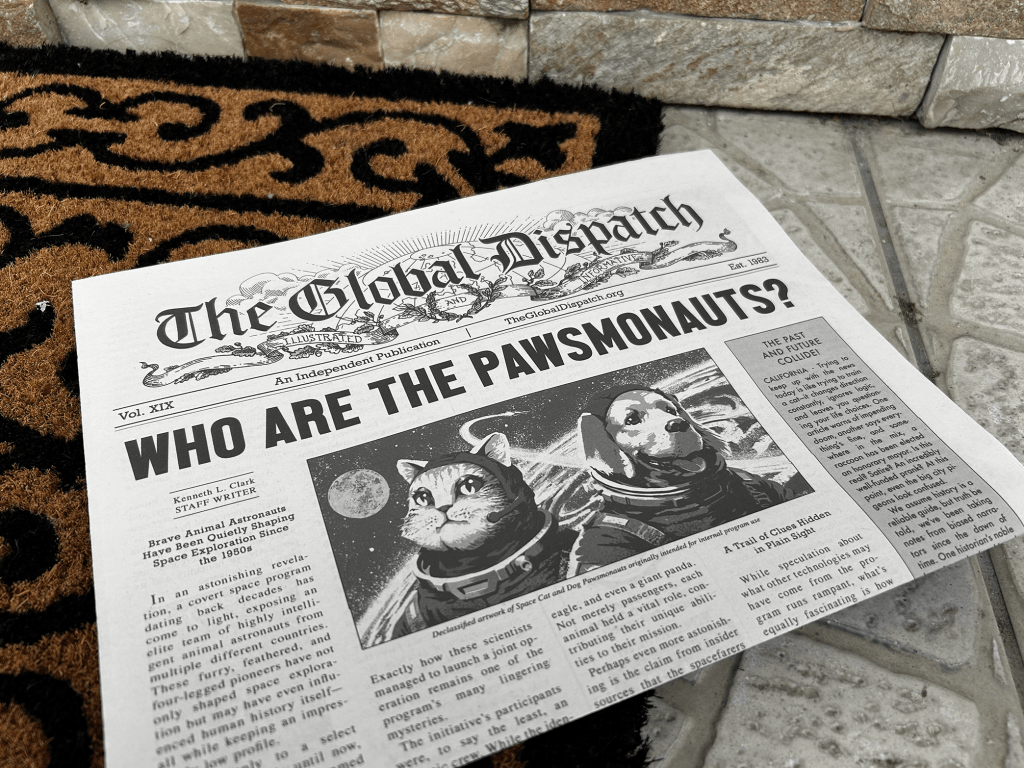
    The Global Dispatch print newspaper

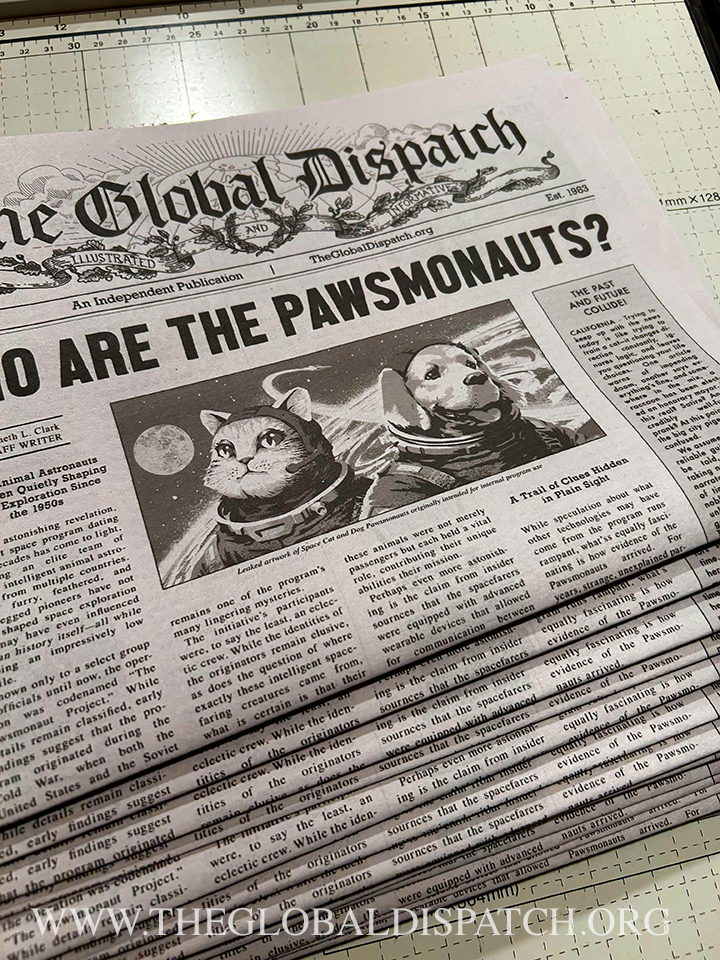
    The premiere issue of the amazing publication breaking the news on all things science, media, and arts from around the world! Four full tabloid pages of articles with highly selective community ads for real local Southern California businesses and creators (even a real coupon for a free coffee!) Includes brain teasers and meta interactive games for the clever and keen-eyed. PLEASE INCLUDE SHIPPING ADDRESS! (Price includes shipping & handling)

    $2.00