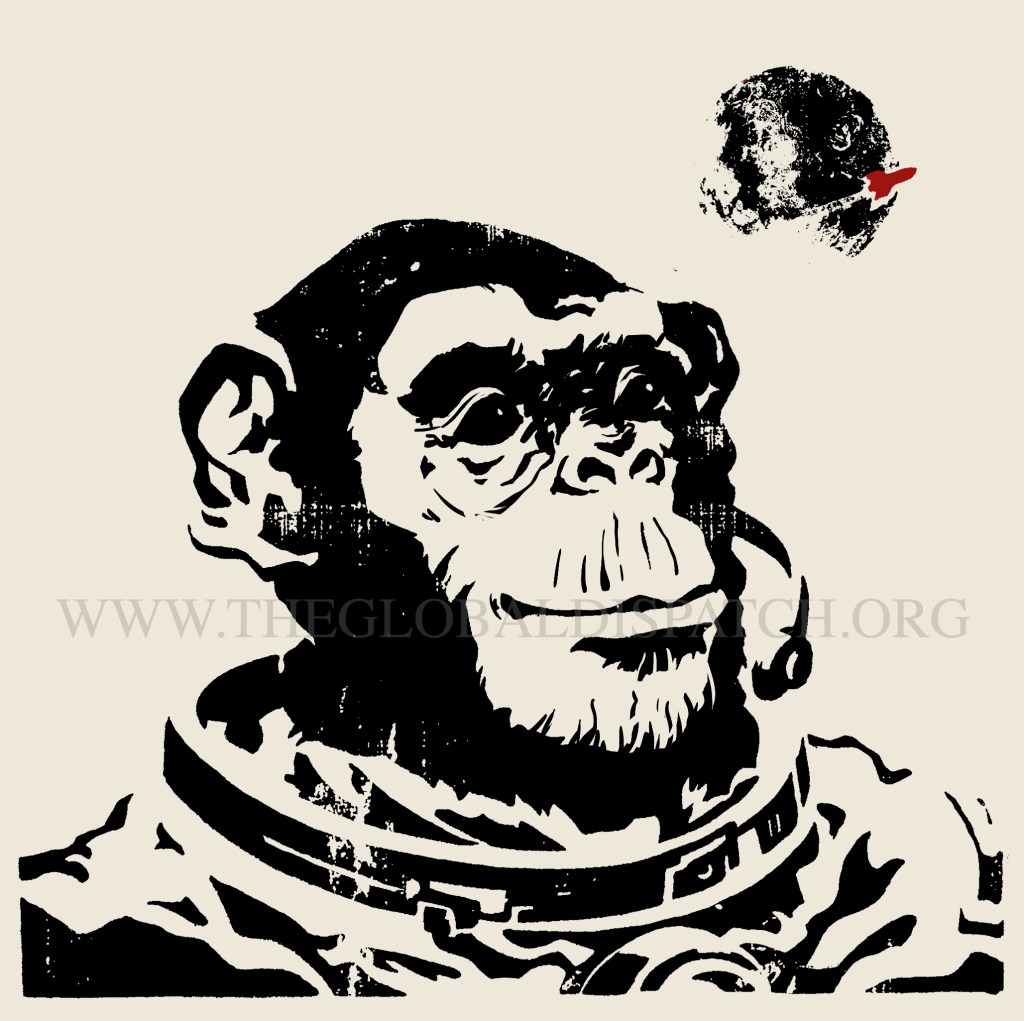
With the recent news of animals astronauts, one of the most tantalizing rumors emerging from the program’s shadow is the identity of a liaison between the creatures and human scientists: an elderly space ape. This figure is said to have been one of the program’s first test pilots and is believed to have played a crucial role in bridging the gap between the furry explorers and the humans in charge. Some suggest that this ape may be one of the few remaining links to the early days of the program, possibly even an integral figure in developing the genetic or technical modifications that made them capable of space travel.
Could this mysterious figure be related to America’s orginal Ham the Astrochimp? The first great ape reaching suborbital flight during the Mercury program certainly captured the hearts of many in 1961. Officially, after his retirement from NASA, Ham eventually joined a group of chimpanzees at the North Carolina Zoo where he passed away in 1983. With the many uncanny stories recently emerging, conjecture may be rampant concerning this ape’s true origins. A clone? Secret offspring?
The two indiers have only confirmed the chimps’s existence but would not disclose any further details. When pressed when we’ll hear more about him “He’ll decide when the time is right,” was all that was said, in a tone conveying a sense of reverence for the figure. From what could be gatherered, the ape also acts as a flight director in the program.
Is humanity on the verge of a new space age—one led by former test subjects? Or is this just another wild conspiracy? One thing is certain: if a chimp is running the show, we might all be bananas for not paying closer attention.
In a world facing numerous challenges, some may question whether space exploration is a worthwhile pursuit or a diversion of resources from more urgent Earthly concerns. While space exploration symbolizes human ambition, the idea that we must choose between it and solving terrestrial issues is rather a false dichotomy.
Within the last several decades we have witnessed a growing disparity in wealth, both within the U.S. and globally. The real question lies in resource allocation and ensuring that innovations benefit those in need in a rapidly changing world. Space exploration, driven by the challenge of solving complex problems, often yields advancements that reach the public in ways a profit-driven model would not. Unlike trade secrets, scientific discovery is meant to be shared, fostering progress on a wider scale.
The advancements driven by space research have transformed life on Earth in ways often forgotten simply because they have become so mainstream. From the miniaturization of everyday devices to medical imaging, space science has led to innovations people rely on. Satellites developed for space missions now provide GPS and essential services including weather forecasting, global communication, and disaster response. Additionally, NASA’s research has contributed to medical breakthroughs such as MRI technology, artificial limbs, radiation shielding, and treatments for cardiovascular health. Similarly, water purification systems, satellite imaging used in agriculture, and solar panel advancements can be used to inform and combat the challenges of climate change.
Beyond technological progress, space exploration fosters a sense of collaboration. Countries that may otherwise be political rivals share knowledge, technology, and resources, promoting peaceful cooperation. Space science also inspires social progress by fueling curiosity and education. Programs encouraging young people to pursue STEM careers plant the seeds for curious minds to grow into ambitious and productive citizens. As investment in space grows, so does its impact on everyday life. Much like the “overview effect” experienced by some astronauts, we here on Terra Firma should aspire to take in the wider and more interconnected perspective of humanity and its place in the universe.
Brave Animal Astronauts Have Been Quietly Shaping Space Exploration Since the 1950s
In an astonishing revelation, a covert space program dating back decades has come to light, exposing an elite team of highly intelligent animal astronauts from multiple countries. These furry, feathered, and four-legged pioneers have not only shaped space exploration but may have even influenced human history itself—all while keeping an impressively low profile.
Known only to a select group of officials until now, the operation was codenamed “The Pawsmonaut Project.” While details remain classified, early findings suggest that the program originated during the Cold War, when both the United States and the Soviet Union, eager to gain an edge in the space race, turned to a surprising source for assistance: civilian scientists detached from political entanglements and, evidently, a highly skilled cadre of non-human astronauts.
The missions acted as a back-channel to further a shared vision of scientific progress with mutual benefit during some very divisive times. Exactly how these scientists managed to launch a joint operation remains one of the program’s many lingering mysteries.
The initiative’s participants were, to say the least, an eclectic crew. While the identities of the originators remain elusive, as does the question of where exactly these intelligent space-faring creatures came from, what is certain is that their missions were as ambitious as they were classified.
A Crew Unlike Any Other
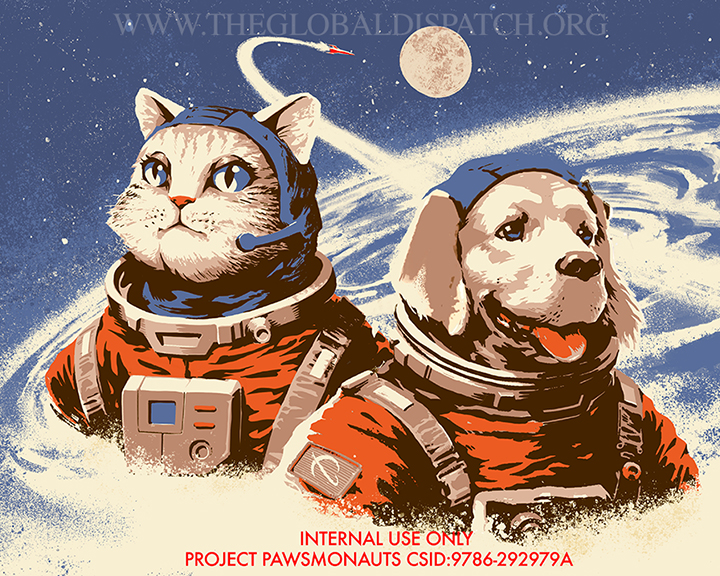
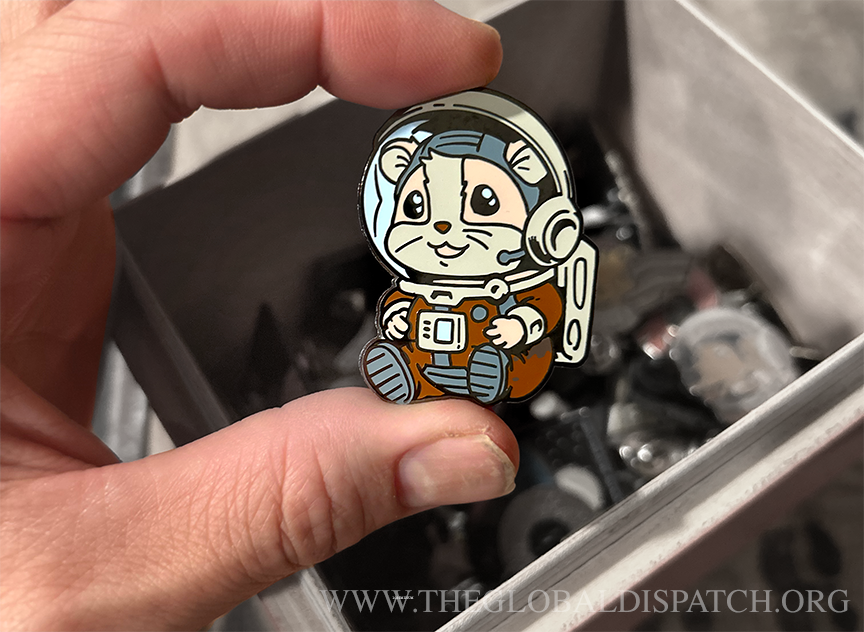
The original Pawsmonauts were reportedly a cat and a dog, a pairing that should have foreshadowed their team’s ability to defy expectations. They were followed by a hamster, a rabbit, a wild raccoon, an eagle, and even a giant panda. These animals were not merely passengers but each held a vital role, contributing their unique abilities to their mission.
Perhaps even more astonishing is the claim from insider sources that the spacefarers were equipped with advanced wearable devices that allowed for communication between both humans and each other.
Early analysis suggests this technology could decode animal brainwaves, effectively translating their thoughts into human language. If true, this could represent a historical breakthrough in cross-species communication and a discovery that, if publicly released, could revolutionize our understanding of language, intelligence, and of course, what our pets really think about us.
A Trail of Clues Hidden in Plain Sight
While speculation about what other technologies may have come from the program runs rampant, what’s equally fascinating is how evidence of the Pawsmonauts arrived.
For years, strange, unexplained parcels have surfaced in small independent retail stores across Southern California—not containing any top-secret blueprints or encoded messages—but commemorative pins, prints, stickers, and buttons featuring the characters themselves. These items were assumed to be delivery errors, but with no return address, store owners simply placed them on their shelves. Over time, these products would find their way into swap meets, collector conventions, and craft shows, becoming odd, unexplained curiosities for those lucky enough to stumble upon them. As it turns out, these items were never meant for public consumption but were intended for internal use—a way for personnel to celebrate their secret heroes within the confines of their own clandestine organization. What was meant to be an internal secret ironically ended up becoming a public mystery, one that is only now beginning to unravel.
According to two anonymous whistleblowers, former employees of the program, the mysterious merchandise was actually part of an intentional slow-release scheme dubbed “Operation Starlight.” This effort appears to be a deliberate strategy to ease the general public into the mind-blowing truth about the Pawsmonauts—one charming pin at a time.
Under the cloak of anonymity, the insiders confirmed that a collective of designers, technologists, and puzzle enthusiasts have been quietly working to bring the story of the Pawsmonauts into the public sphere. Whether this will take the form of books, documentaries, or something more unconventional remains to be seen. There is, of course, an undeniable contrast between the scale of a decades-long international space program and a small band of locals slowly unveiling its history through scattered collectibles, but sources insist that the strategy behind this slow-burn reveal will become apparent in due time. For now, our investigation continues, and we welcome any information from those who may have encountered these artifacts. If you’ve encountered one of these mysterious pins or prints, you may be holding a small but significant piece of history.
A Lesson in Cooperation
The Pawsmonauts’ story is more than just an odd curiosity—it presents a powerful vision of collaboration at a time when global cooperation is more critical than ever. The idea that animals from different backgrounds, species, and even rival nations could work together is both an inspiring and thought -provoking notion.
Publicly facing initiatives like the International Space Station (ISS) and the Artemis Missions stand as testaments to what can be achieved through unity. Perhaps their greatest achievement isn’t just scientific discovery, but the simple, profound lesson that teamwork transcends boundaries, even between species. As we uncover more about this astonishing program, one thing remains clear: the Pawsmonauts’ story is only beginning to be told.

 Kit n' Rivet