Tag: mental-health

  • Print Media: An Enduring Source

    Print Media: An Enduring Source

    In an era where digital screens dominate nearly every aspect of our lives, print media continues to hold ground as a vital source of information and deeper storytelling. As the world becomes increasingly reliant on web platforms and social media, the unique position of print journalism has never been clearer.
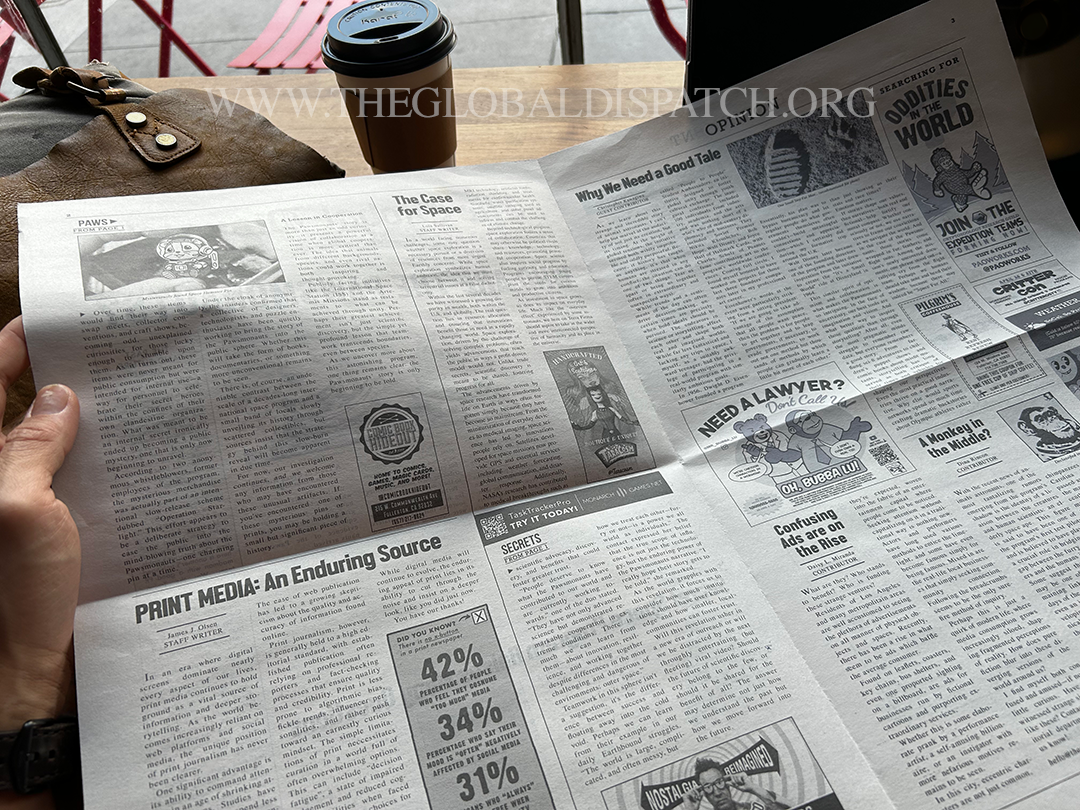
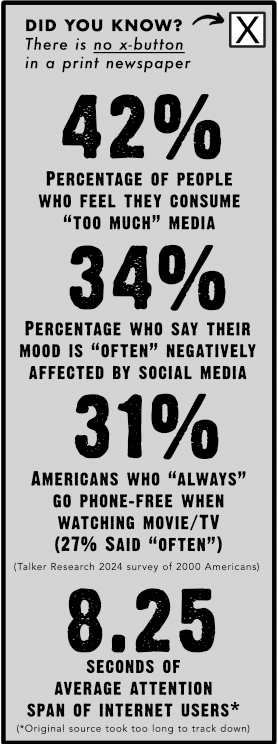
    One significant advantage is its ability to command attention in an age of shrinking attention spans. Studies have shown that people spend less time on each piece of content, (and there could be no more appropriately superfluous word) scrolling through endless social media feeds or skimming online articles. In contrast, print demands a level of engagement, perhaps because of its increasing rarity. Readers are more likely to focus on a physical newspaper or magazine without the distractions of push notifications or hyperlinks. Moreover, print media offers a level of trustworthiness that’s often lacking in the digital world.
    Online content can often be tainted by misinformation, clickbait headlines, and unverified sources without clear indication as to their promotional, satirical, or humorous nature. The ease of web publication has led to a growing skepticism about the quality and accuracy of information found online. Print journalism, however, is generally held to a high editorial standard, with established publication often relying on professional reporters and fact-checking processes that ensure quality and credibility. Print is less prone to algorithmic bias, fickle trends, influencer personalities, and rather push toward an earnestly curious mindset.

    The simple limitations of print necessitates curation in a world full of often overwhelming options. This can include “decision fatigue”, a state of impaired judgment and reduced cognitive abilities when faced with near infinite choices for consumption. In addition, the tactile nature of print provides an experience that digital media cannot replicate. Reading a physical medium offers a sense of permanence and intentionality—an opportunity to unplug from the constant barrage of pixels on a screen and engage with stories in a more thoughtful, reflective manner. Aside from the mental benefits of unplugging, shown in many studies, physical benefits also persist (ie: If you read this on paper, you wouldn’t need to rest your eyes from blue light strain after reading this very article.)

    While digital media will continue to evolve, the enduring appeal of print lies in its ability to cut through the noise and insist on a deeper look. If you are a subscriber of our print edition, you have our deepest thanks!
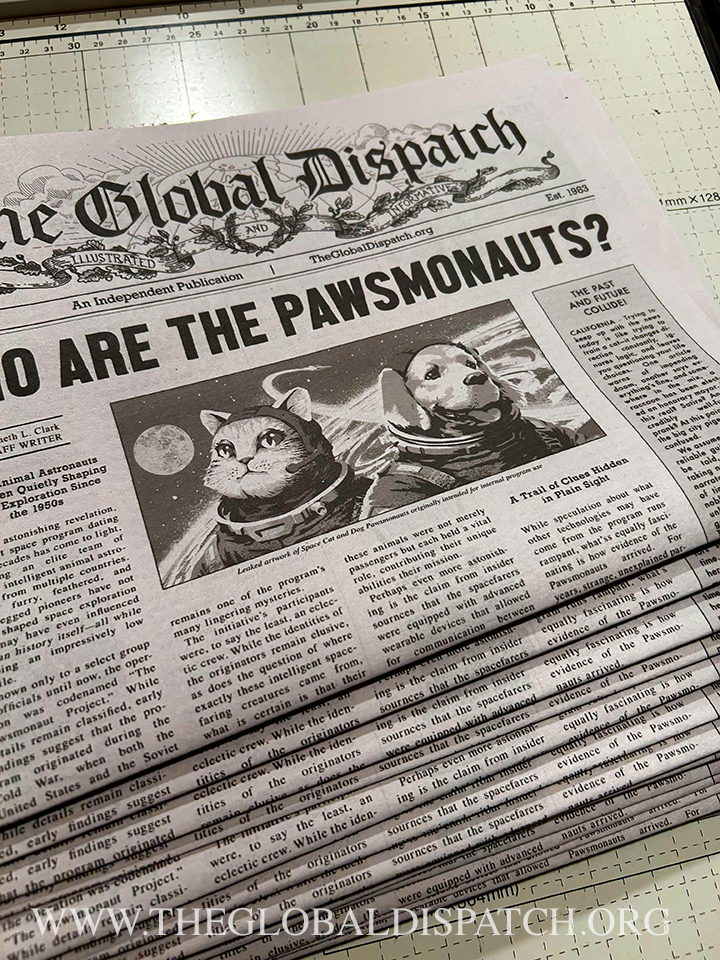
    newspaper-color

    The Global Dispatch print newspaper

    The premiere issue of the amazing publication breaking the news on all things science, media, and arts from around the world! Four full tabloid pages of articles with highly selective community ads for real local Southern California businesses and creators (even a real coupon for a free coffee!) Includes brain teasers and meta interactive games for the clever and keen-eyed. PLEASE INCLUDE SHIPPING ADDRESS! (Price includes shipping & handling)

    $2.00

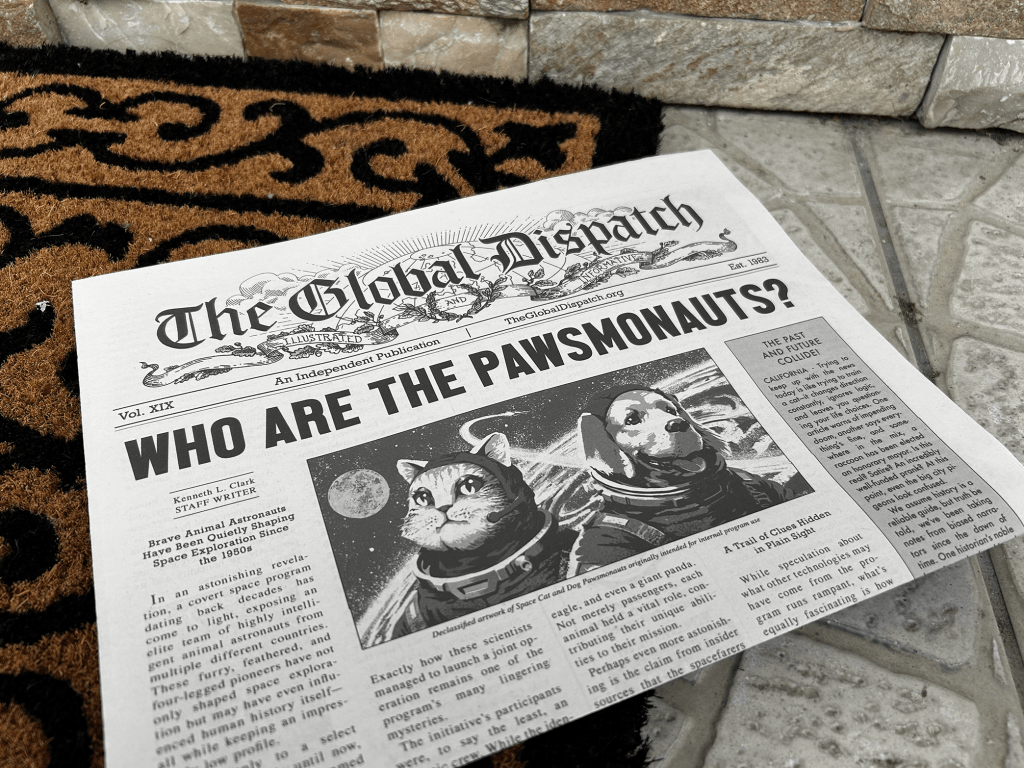
  • Secret Space Program Raises Many Questions

    Secret Space Program Raises Many Questions

    The revelation of a long-hidden space program involving highly trained animals raises pressing questions about transparency, ethics, and the role of secrecy in scientific advancement. For decades, powerful institutions—both governmental and corporate—have operated behind closed doors, fostering skepticism among the public.

    Now, with reports of a sentient space animal program coming to light, many are left wondering: What else has been kept from us? It’s no surprise that the public’s reaction is a mix of awe, suspicion, and sheer existential confusion. However, not all secrecy is inherently a sinister plot for world domination. There are instances in which secrecy may be necessary to prevent a panic. However this finding challenges our understanding of what has been possible, Perhaps this was a case of avoiding the PR nightmare of admitting that a cat in a spacesuit is better at astrophysics than most of us humans.

    The recent disclosure feels reminiscent of the 1990s declassification of the National Reconnaissance Office, an entire agency that remained secret for decades. This organization provided critical satellite-based intelligence to support defense, national security, and intelligence operations for decades outside of public view. But unlike military projects, the Pawsmonauts program appears to be a staunchly peaceful endeavor focused on exploration and discovery. Perhaps their success is due to that fact that those at the helm are free from common human foibles like political ambition or greedy financial incentives.

    Yet, the real shock isn’t that these furry astronauts exist—it’s that their groundbreaking research has remained uncredited. Leaks surrounding their work suggests that certain advancements may have already benefited society without recognition. What life-changing technologies do we owe to the tireless efforts of a chimp in a lab coat? What advancements in medicine, engineering, or communication might be, unbeknownst to us, credited to a particularly enterprising golden retriever?

    The two whistleblowers, a man and a woman, have come forward (speaking anonymously for now), insisting that the public deserves the chance to engage in decision-making. Their proposal is to foster a more direct, community-driven approach. The goal would be to have power and knowledge decentralized, perhaps by involving more civilians in the conversation—because if we can trust a raccoon to handle rocket propellant mixtures, maybe we can trust people with the truth. They believe the public deserves know how we’ve benefited from the endeavors of others and shed some light on the equally mystifying economics of it all. In an age where crowdfunding and microfinance have made huge impacts, the frameworks exist to create a more democratic approach to scientific advocacy, discovery, and benefits that could foster greater trust.

    “People deserve to know what the Pawsmonauts have contributed to our world and are currently working towards,” one of the duo stated. “They have not only advanced science but demonstrated remarkable cooperation in extreme conditions. There is much we can learn from them—about innovation, resilience, and working together despite differences in the most challenging and dangerous of environments: outer space.”

    Teamwork in this sphere isn’t a suggestion, it’s the difference between success and floating away into the cold void. Perhaps we can learn from their example in our daily Earthbound struggles. “The world is large, complicated, and often messy, but how we treat each other—furry or not—is a power we all wield as individuals.” The contact expressed her belief that the true scope of influence is not just the technology, but the enduring power of the Pawsmonauts narrative. “I really hope their story gets to be told,” she remarked.

    As the world grapples with this revelation, it forces us to consider how much institutions should have over knowledge and how smaller, local communities can foster trust.
    Will this revelation usher in a new era of outreach or will we be distracted by the next throughly entertaining (but fleeting) viral video? Should the future of scientific discovery belong to the few, or should it be shared for the benefit of all? The answer may determine not just how we understand the past but how we move forward into the future.