Category: TheGlobalDispatch

  • The Highs and Lows of Remakes

    The Highs and Lows of Remakes

    by Justin Quizon

    “WHY CAN’T HOLLYWOOD JUST MAKE SOMETHING ORIGINAL?!”

    This is the age old question that keeps getting brought up more and more, year after year, especially when a remake gets announced.

    However, with movie production costs going up, as well as movie ticket prices, the reason to go with a remake is always the same…it SEEMS like less of a risk.

    I’ve been a film fan my whole life, and my fascination with remakes has been there from the beginning. 

    While I have my reservations when I see a remake announcement, I am always just a bit intrigued to see what they end up doing with it.

    One specific day, I did a double feature that solidified my thoughts on remakes as a whole. The movies? Footloose (1984) and it’s remake from 2011. Many dismissed the 2011 Footloose remake, but I held interest because I liked the previous films from it’s director, Craig Brewer.

    When I finished both I was not only surprised by how much I liked the 2011 remake, I liked it more because I was able to compare the two movies after watching them so close with each other.  

    There was something fun for me about seeing how the new film adapted some of the original movies scenes, and see what they kept and what they even made better. 

    I became so intrigued with remakes that I even co-created a podcast ALL ABOUT remakes, NOTHING NEW: A REMAKE PODCAST.

    So year after year, month after month, my co-host Andrew Linde and me will watch remake after remake and see how things go. 

    What I’ve come to learn about watching so many remakes is that… there is MORE of a risk in making a remake.

    When the remake doesn’t work for me as a film, it becomes impossible to not compare it to the original film…thus making it worse because it’s a remake. Being an ORIGINAL film that ends up being bad is one thing, it’s another level of annoyance if it’s a bad version of a better movie. 

    But if the remake IS a good film…the comparing is fun. It’s like hearing a good cover of a beloved song. It can even make you love the original even more. Both films can be beneficial.

    After 7 years of hosting this show, I’ve come to appreciate the creative risks of a good remake. To see elements of the original and see where you can expand or improve.

     Because at the end of the day, if the remake ends up being a great movie…that just simply means there are MORE great movies out there. 
  • A Monkey in the Middle?

    A Monkey in the Middle?

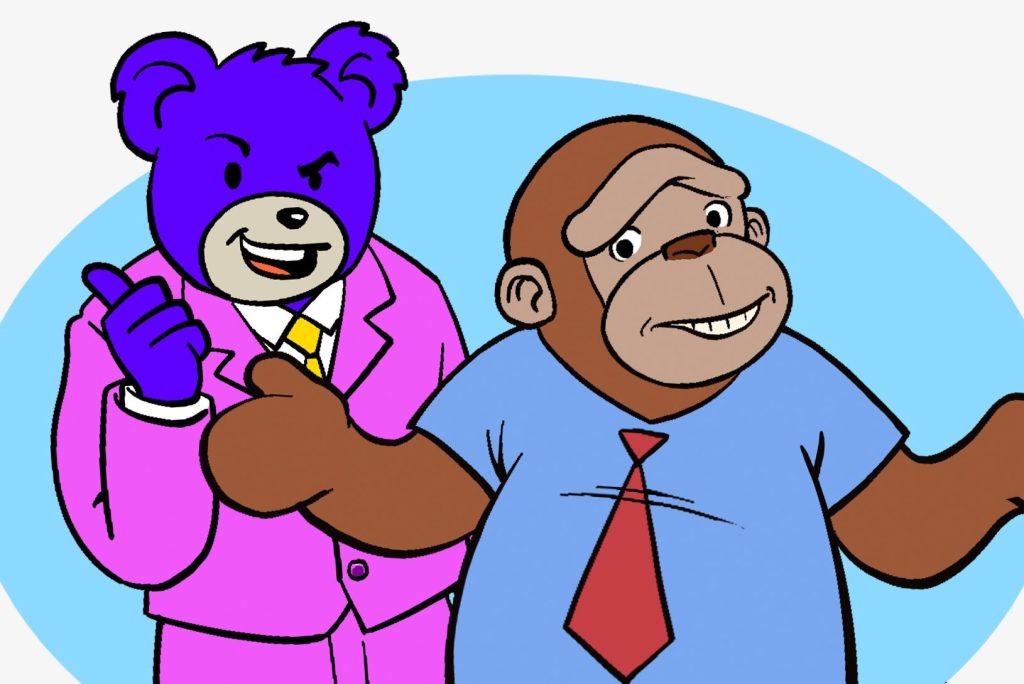
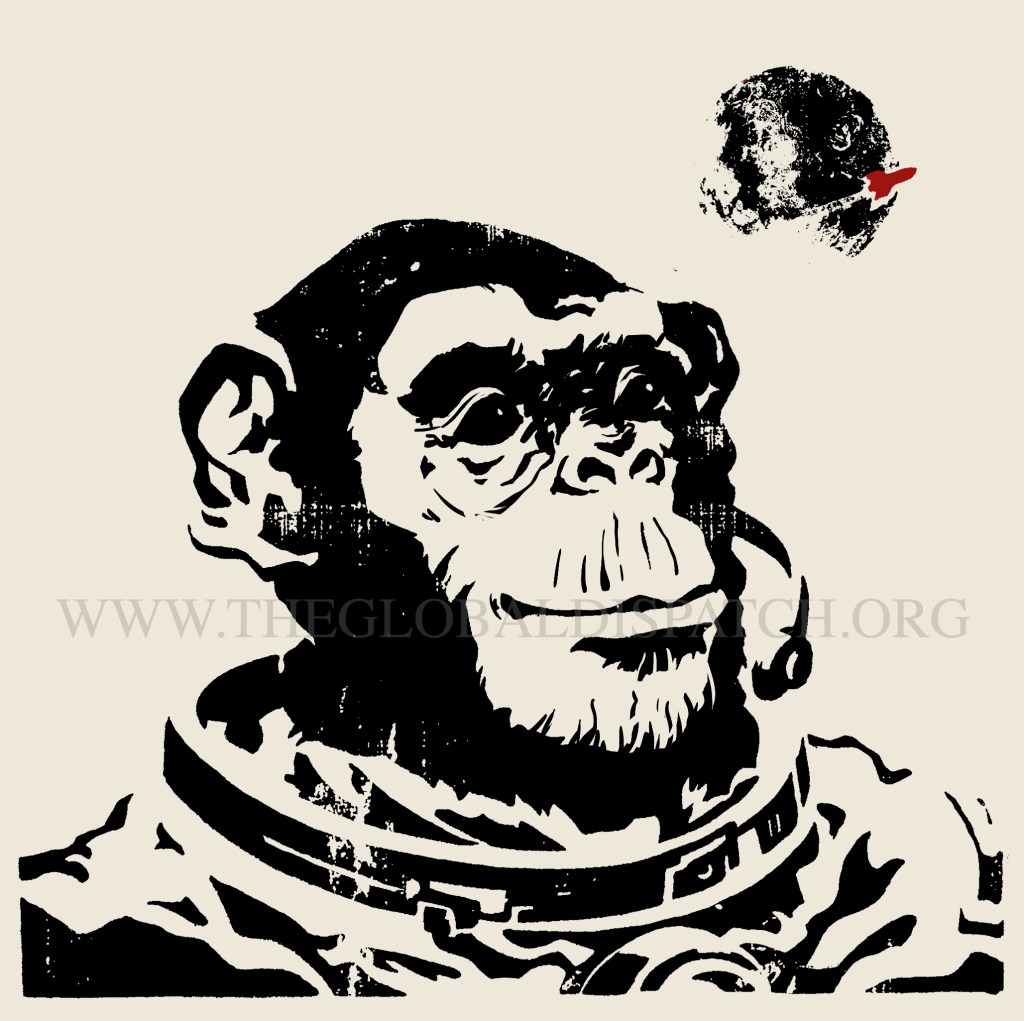
    With the recent news of animals astronauts, one of the most tantalizing rumors emerging from the program’s shadow is the identity of a liaison between the creatures and human scientists: an elderly space ape. This figure is said to have been one of the program’s first test pilots and is believed to have played a crucial role in bridging the gap between the furry explorers and the humans in charge. Some suggest that this ape may be one of the few remaining links to the early days of the program, possibly even an integral figure in developing the genetic or technical modifications that made them capable of space travel.

    Could this mysterious figure be related to America’s orginal Ham the Astrochimp? The first great ape reaching suborbital flight during the Mercury program certainly captured the hearts of many in 1961. Officially, after his retirement from NASA, Ham eventually joined a group of chimpanzees at the North Carolina Zoo where he passed away in 1983. With the many uncanny stories recently emerging, conjecture may be rampant concerning this ape’s true origins. A clone? Secret offspring?

    The two indiers have only confirmed the chimps’s existence but would not disclose any further details. When pressed when we’ll hear more about him “He’ll decide when the time is right,” was all that was said, in a tone conveying a sense of reverence for the figure. From what could be gatherered, the ape also acts as a flight director in the program.

    Is humanity on the verge of a new space age—one led by former test subjects? Or is this just another wild conspiracy? One thing is certain: if a chimp is running the show, we might all be bananas for not paying closer attention.

  • Confusing Ads are on the Rise

    Confusing Ads are on the Rise

    What are they? Who stands to benefit? Who is funding these strange ventures? Residents of Los Angeles and many metropolitain areas are well accustomed to seeing the plethora of advertisements on all manner of physical objects and spaces.

    Recently, there has been a rise in what seem to be ads which baffle the average consumer. Found on leaflets, coasters, key chains, bus shelters, and even one proported sighting on a billboard, are ads for businesses run by fictional cartoons and purporting extraordinary services.

    Whether this is some elaborate prank by a performance artist, a self-amusing billionaire, or an instigator with more nefarious motives remains to be seen. In this city, eccentric characters are not just common, they’re expected, woven into the fabric of an entertainment capital where people come to be noticed.

    Seeking attention without capitalizing on it in a traditional way is nothing new. Actors and performers have long used various methods to entice the limelight, and some have even become famous simply for being famous. Mixed in are the real-life local businesses that simply seeking community connection. Following the breadcrumbs seems to be the only surefire method of inquiry. Perhaps this is just a quirk of modern life, where media consumption grows increasingly siloed, shaping fragmented perceptions of reality. How does pure fiction blur into these diverging versions of the world around us? I find myself both confused and amused—if not a little curious. Have you witnessed strange sightings like these? Contact our Editorial department and let us know!

  • Why We Need a Good Tale

    Why We Need a Good Tale

    As we learn about this strange and incredible story of animal astronauts, I can’t help but marvel at the audacity of not just its creation, but its timing. At the height of global tensions, the initiative seemed both wildly improbable and oddly purposeful. Because, if history has taught us anything, it’s that when humans are stressed in any conflict, the situation can do one of two things: Tear us apart or bring us together (often in extraordinary and unexpected ways).

    While trends and a sentiments of the day can often drive decision-making, uncertain times are precisely when bold ideals should be pursued. The endeavors in science or storytelling, affect each other and shape both real and imagined worlds.

    While far less fantastical and lacking any trips to space, I myself, as a suitably awkward teenager, had the privilege of participating in a real-world program with similarly ambitious goals. In 1956, Dwight D. Eisenhower founded a program called “People to People” Student Ambassadors, an initiative designed to foster global unity through youth cultural exchange. The inaugural conference included 100 individuals from industry, academia, and the arts and was nothing short of a who’s who of mid-century diplomacy and business. They included Soviet Premier Nikita Khrushchev, Bob Hope, Walt Disney, and Joyce Hall of Hallmark Cards, with Charles Schulz of Peanuts fame contributing art to the program’s worldwide conferences. Coming full circle, I found myself honored to have worked on projects for those last three founders’ companies later in my professional art career.

    Eisenhower’s words at the event were particularly striking from a sitting president: “If we are going to take advantage of the assumption that all people want peace, then the problem is for people to get together and to leap governments, if necessary, to evade governments, to work out not one method but thousands of methods by which people can gradually learn a little bit more of each other.”

    Essentially, his plan was to bypass bureaucracy and let regular people do what governments themsleves often couldn’t—build meaningful connections and appreciation—which I certainly did during my formative trip around the U.K.
    Walt Disney later became one of the founding directors of the program and later drew inspiration from the initiative to create the “It’s a Small World” ride at Disneyland in 1964.

    This similar spirit of optimism and collaboration is what makes the Pawsmonauts so intriguing. In the face of uncertainty, our best tools are imagination and vision. And what better way to inspire those qualities than through storytelling? After all, even the most pragmatic minds struggle to remember raw data, but everyone remembers a good story.

    From far- flung sci-fi adventures to children’s puppet shows and comic books about misfit mutants, storytelling has long served as both critique of their times and vehicles for shaping our perspectives. Even the most practical industries thrive on a good narrative. Why else would sports networks spend so much time crafting dramatic backstories about Olympic athletes rather than just showing us their stats and race times?
    Emotion matters.

    If stories shape our values, then narratives—both real and fictional—help fortify our moral compass. Whether consciously or not, we use narratives to frame our convictions as we navigate the world. And in the case of the Pawsmonauts, those stories come wrapped in fur, feathers, and flight suits. Among the mission’s newly uncovered documents, one phrase stood out—a rallying cry from the flight team. Perhaps we humans should take note and heed their wisdom, because there may indeed be “Space Fur All.”

    -Chris Kawagiwa

  • The Case for Space

    The Case for Space

    In a world facing numerous challenges, some may question whether space exploration is a worthwhile pursuit or a diversion of resources from more urgent Earthly concerns. While space exploration symbolizes human ambition, the idea that we must choose between it and solving terrestrial issues is rather a false dichotomy.

    Within the last several decades we have witnessed a growing disparity in wealth, both within the U.S. and globally. The real question lies in resource allocation and ensuring that innovations benefit those in need in a rapidly changing world. Space exploration, driven by the challenge of solving complex problems, often yields advancements that reach the public in ways a profit-driven model would not. Unlike trade secrets, scientific discovery is meant to be shared, fostering progress on a wider scale.

    The advancements driven by space research have transformed life on Earth in ways often forgotten simply because they have become so mainstream. From the miniaturization of everyday devices to medical imaging, space science has led to innovations people rely on. Satellites developed for space missions now provide GPS and essential services including weather forecasting, global communication, and disaster response. Additionally, NASA’s research has contributed to medical breakthroughs such as MRI technology, artificial limbs, radiation shielding, and treatments for cardiovascular health. Similarly, water purification systems, satellite imaging used in agriculture, and solar panel advancements can be used to inform and combat the challenges of climate change.

    Beyond technological progress, space exploration fosters a sense of collaboration. Countries that may otherwise be political rivals share knowledge, technology, and resources, promoting peaceful cooperation. Space science also inspires social progress by fueling curiosity and education. Programs encouraging young people to pursue STEM careers plant the seeds for curious minds to grow into ambitious and productive citizens. As investment in space grows, so does its impact on everyday life. Much like the “overview effect” experienced by some astronauts, we here on Terra Firma should aspire to take in the wider and more interconnected perspective of humanity and its place in the universe.